Parenting Help That Actually Works
(Even When You're Exhausted)
End tantrums. Reduce power struggles. Rebuild trust with your child—without yelling, threats, or guilt.

You're not a bad parent. The day just got heavy.
Simple, practical guides for meltdowns, transitions, and hard
parts of the day — so you can spot the build-up sooner and handle it
better when it does.

Not sure where to start? This one's free.
Grab Sophie's In-the-Moment Guide — a quick reference for what to do (and what to stop doing) when your child is mid-meltdown. It's the page you'll want on your phone when things go sideways.
You know that moment.
Your child is screaming because you cut the toast wrong. You've already asked them three times to put their shoes on. Dinner is
cold. You're late. And somewhere in the back of your mind, a voice is whispering: Am I doing this wrong?
You're not.
That meltdown isn't a sign that you've failed. It's the last thing in a long day — the missed nap, the skipped snack, the overstimulating morning, the three small things before this one that already pushed your child to the edge.
By the time the toast went wrong, the day had already been building. Something small was always going to tip it over.
The problem isn't your child. And it isn't you. It's that nobody showed you how the day actually builds — and how to work with that instead of against it.
That's what these guides are for.
Most hard moments don't start at the moment.
The 5pm meltdown usually started at 10am. The bedtime battle started at 4. The refusal at the door started three small things ago.
You can't see it in the moment, but the load is always building — fatigue, hunger, overstimulation, transitions, long stretches strapped in or sitting still, the small demands of the day stacking up. By the time something small tips it over, the weight has been gathering for hours
Once you can see it building, you stop being surprised by the fall. And you know exactly where to step in..

A simple way to see the day — and change it.
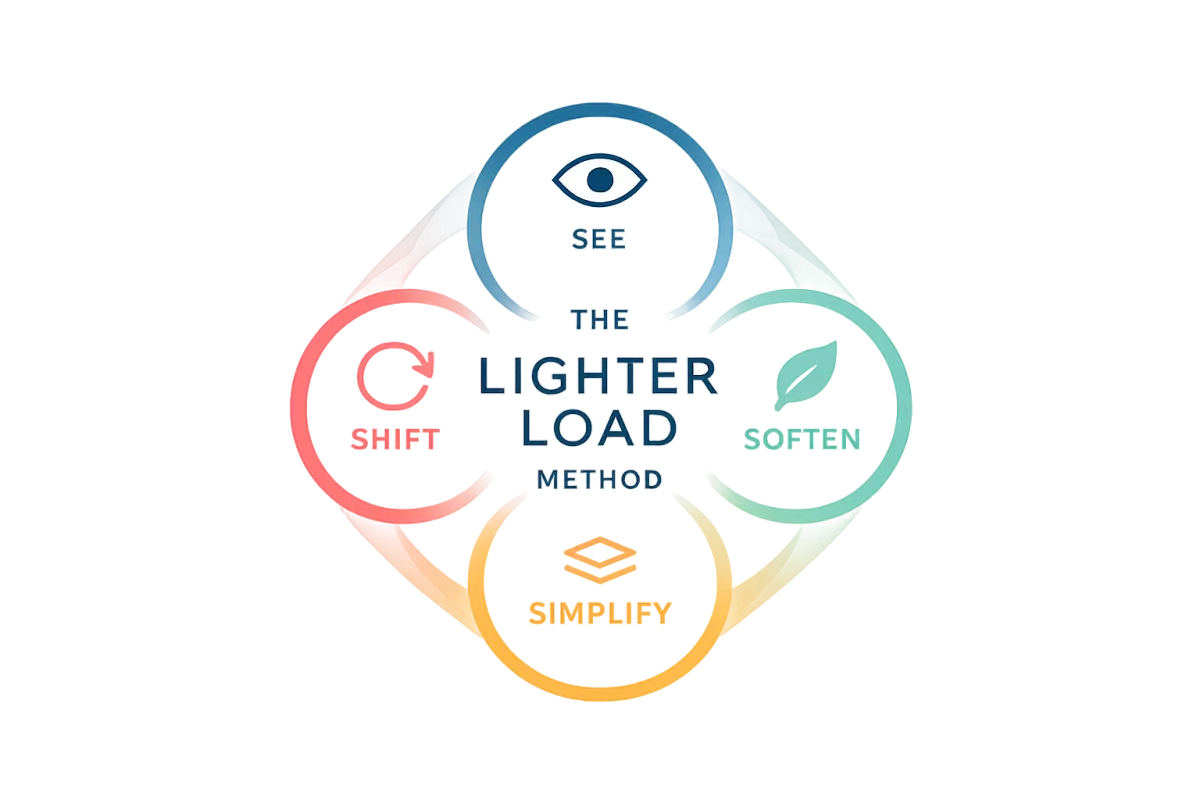
There's a name for what we just described. It's called The Lighter Load™ — four places you can step in across any day to keep hard moments from building, and to handle them better when they do.
See — what's building before it overflows
Notice the load gathering across a morning, so you stop being surprised when the afternoon falls apart.
Soften — the load, before it spills over
Small daily moves that take the edge off when your child's body is already carrying too much.
Simplify — the moments that ask too much
Redesign the parts of the day that predictably go wrong — transitions, choices, routines — so they stop being flashpoints.
Shift — the pattern, one repair at a time
What to do after a hard moment, so your child learns that feelings pass and connection holds.
This isn't a set of techniques to memorize. It's a way of seeing the day that changes what you notice, what you do, and how your child responds.
In practice, that might mean spotting the missed nap before pickup, getting outside for ten minutes before a hard afternoon, simplifying what happens at the door when you get home, and repairing after the meltdown instead of ending the day there.
Each guide below puts the Lighter Load to work on a different part of family life.
Three ways to make this week lighter than last.
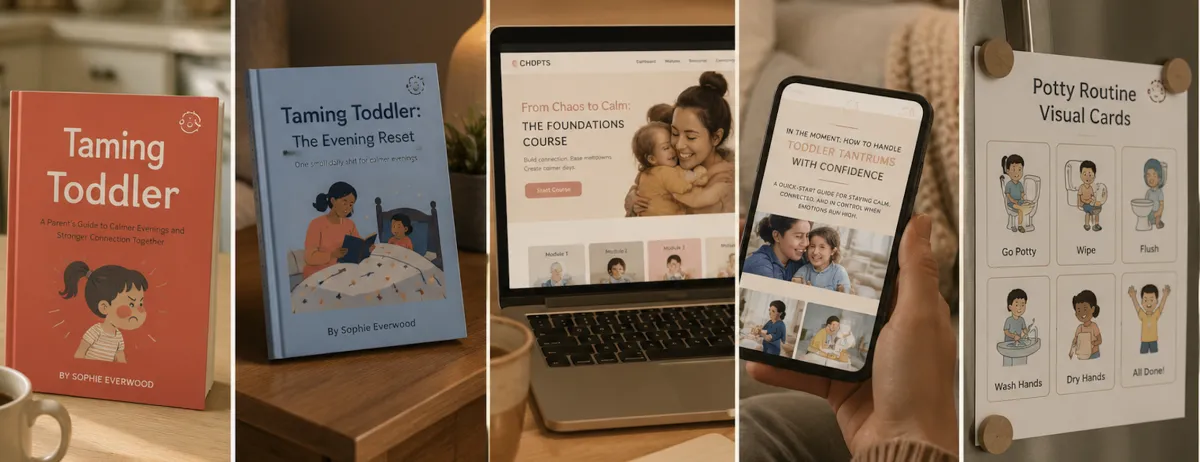
Taming Toddler: A Parent's Guide to Understanding Toddler Emotions
This is the best place to start if meltdowns are the flashpoint in your house. A short, focused read on why toddler meltdowns happen, how to spot them building, and what to do before, during, and after — grounded in the Lighter Load.
Use it tonight. See a difference by the end of the week.
The Evening Reset: One Small Daily Shift for Calmer Evenings
Seven days. One small change each day. By the end of the week, your evenings look different — not perfect, but noticeably calmer.
Day 1 starts with you, not your child — because the fastest way to change the energy in a room is to change your own nervous system first. From there, each day gives you one thing to change, one thing to say, and one thing to stop doing.
Includes daily reminder cards designed to be screenshotted and kept on your phone.
From Chaos to Calm
A 13-module video program with a companion ebook, covering how children actually develop, how to foster real independence, and how to communicate in ways that strengthen your connection instead of wearing it down.

What this isn't.
No countdown timers. No "only 3 copies left." No one trying to
convince you that you're broken and only this product can fix you.
Parenting is hard enough without being marketed to like you're a
problem to be solved.
Everything here is designed to be genuinely useful — something you can pick up, try tonight, and feel a difference by the end of the
week. If it doesn't help, you'll know within a few days. And if it
does, you'll want to keep going.
That's the only sales strategy here.
About CHDPTS
Parent. Author.
CHDPTS publishes short, practical parenting guides by Sophie Everwood.
The focus is simple. Calm, useful support for the hard parts of family life — when everyone's tired, the day has already piled up, and you need something small enough to actually use.
No perfect-family pressure. No systems to memorise. Just practical tools, for parenting as it actually happens.
Everything here is meant to help in real life. Not just sound good in theory.

Tomorrow can be different.
You don't need to overhaul your entire parenting approach. You
need one small shift that makes tomorrow a little lighter than
today.
Instant PDF download. Read it tonight, use it tomorrow.