
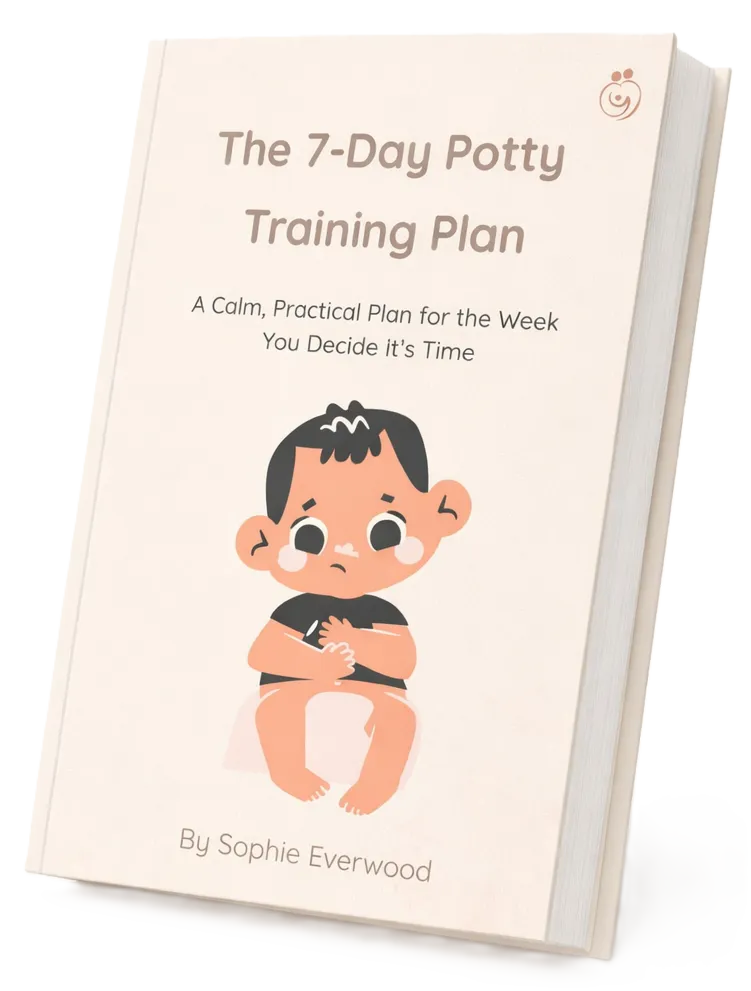
The 7-Day Potty Training Plan
A calm, practical plan for the week you decide it's time. Written by
a parent who's been through it - built around what actually happens,
not what should.
30-day money-back guarantee.
What this is
The 7-Day Potty Training Plan is a nineteen-page day-by-day guide,
plus four printable tools. Each day of the week has its own focus,
its own guidance, and its own section on what to do when things feel like they're not working.
It's designed to be read one day at a time. You read Day 1 the night
before you start. The next morning, you follow it. That evening, you
read Day 2. And so on.
You don't need to figure anything out in the moment. The plan has
already figured it out with you.
The approach
Most potty training guides focus on what to do when things go wrong.
The accident. The refusal. The meltdown.
This one was built around a different idea.
Most hard moments — during potty training and outside of it — aren't random. They happen after a build-up. Your child is tired, or adjusting to too much at once, or carrying something from earlier in the day that's still sitting with them by the afternoon.
Once you learn to see what's building, the week changes. You stay ahead of the hardest moments instead of reacting to them. Your child has a steadier parent to work with. And the new routine has room to settle.
I call this The Lighter Load. It's the approach behind every day of the plan — and it's the thread that runs through the other guides too.
None of the pieces of this are new. How toddlers learn, how calm gets built, how patterns form — these are well-understood. What's mine is the shape of it, and a language I can hold in my head when I'm tired and need to know what to do next.
The week, day by day
Seven days. One focus each. Here's what you'll be working on.
Every day includes a section called If It Feels Like It's Failing.
That section matters more than the rest of the page combined.
Look inside
Here's what Day 1 looks like.
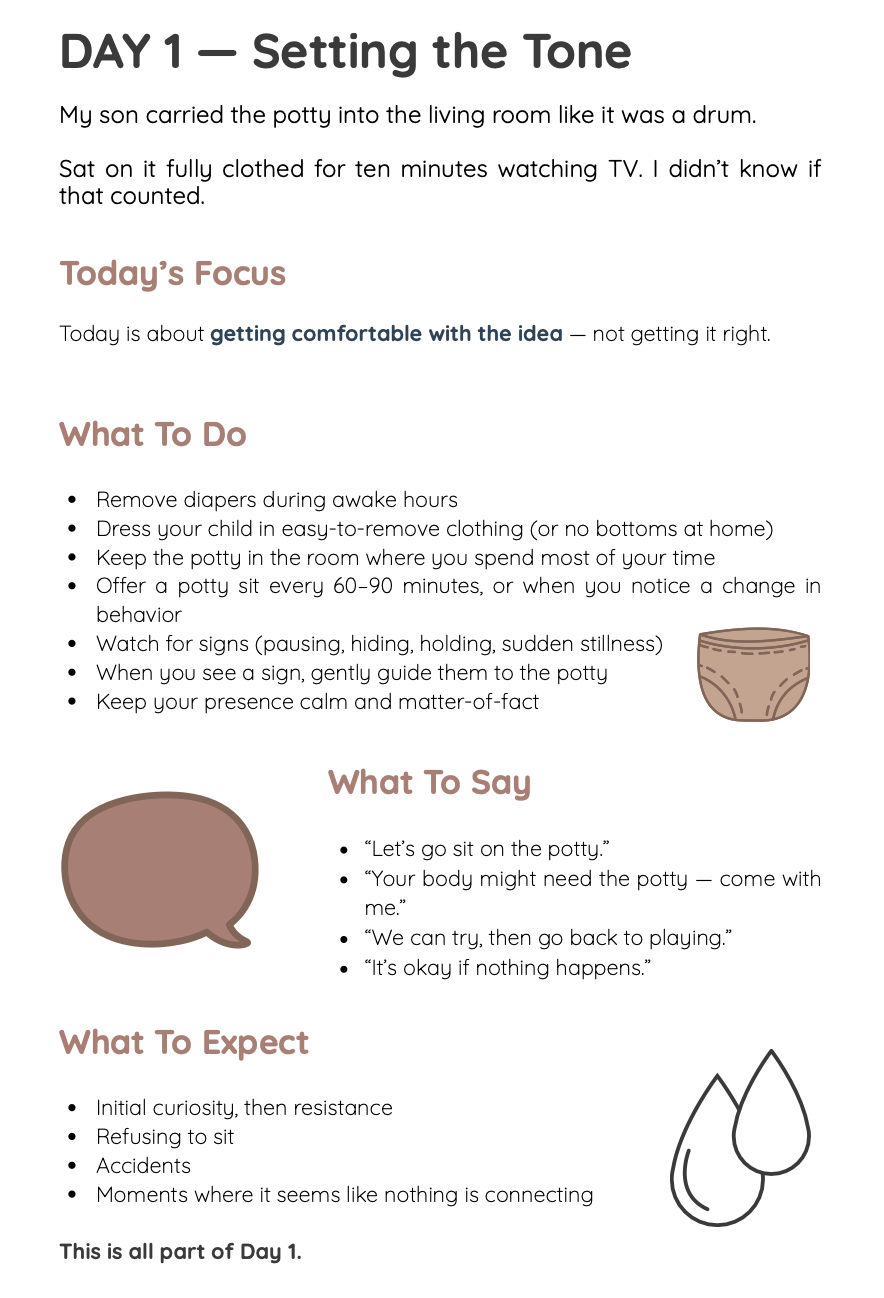
Every day follows the same simple structure. What to do. What to say. What to expect. What to do when it feels like it's not working.
The guide and four printable tools, delivered as a single PDF download.
A 19-page day-by-day guide. What to do, what to say, what to expect, and what to do when it feels like it's not working.
For tracking prompts, accidents, and patterns so you can see what's working. Print one for each day.
Ready-to-use phrases for the moment it happens, designed to stick on the fridge or keep in your pocket. Two copies.
A simple form to share your approach with caregivers so your child hears the same language in different places.
Effort-based, not outcome-based. Your child marks attempts and small steps, not just successes.
About the author
I'm Sophie Everwood. I went through this twice, five years apart, and remembered almost nothing the second time.
What I remembered was how much of it came down to me. Not my technique. My state. When I was calm, the week went better. When I wasn't, it didn't. That sounds obvious. It's harder to actually do than to say.
The 7-Day Potty Training Plan is the guide I wish I'd had. It's the plan a calmer version of me would have written on Day 0, if I'd known what was coming.
The 7-Day Potty Training Plan
$37
Questions
What age is this for?
Most children start between 18 months and 3½ years. The plan is written for families beginning the process. If your child is older than 3½ and hasn't shown signs of readiness, or there's any discomfort with toileting, it's worth checking in with your pediatrician first.
What if we don't finish in seven days?
You won't, in the sense that potty training doesn't have a clean finish line. The plan's structure carries past the first week. The daily framework, the printables, and the Accident Response Guide all keep working as long as you need them.
How is this different from your other guides?
The other guides cover different parts of toddler life — tantrums, evenings, daily rhythm. This one is focused specifically on the potty training week. They all share the same underlying approach, so they work well together, but you don't need any of them to use this one.
What format is it?
A single PDF, delivered instantly after purchase. Works on phones, tablets, and computers. The printables can be printed at home on standard paper.